Showing posts with label fashion. Show all posts

Thursday, November 04, 2010

haute is in the details


Chanel Fall/Winter 2010-2011. This collection by Karl Lagerfeld blew me away with its impeccable balance of lightness and richness, and its sheer consistent beauty in modern elegance. Ice princesses, arctic fantasies, and luxurious snuggly comfort as if embraced by polar bears for warmth.


^ Full runway show - part 1

Let it show, let it show, let it show!


^ Full runway show - part 2


Saturday, October 23, 2010

androgyne


Freja Beha Erichsen is a model of the highest international caliber. She has one of the rarest, most unique, potent, and memorable faces today and a style no one else can claim - a kind of look and presence very, very few possess. A drop dead gorgeous edge at once refined and raw. I have my own personal style and features and yet I see some of mine in her, from the lean silhouette to the defiant slouch to the high cheekbones that she does not try to hide to the monochromatic dark colours she wears.

Looking at her, for me it's not that I want to emulate her. On the contrary I see in her and in a few others that possess a similar concentration of individuality a kinship. Freja in her strength and inimitable style merely affirms my own, which is what embodies true inimitable personal style.

Now, if I could only find a pair of black leather lowrider skinny jeans that fit me.


Thursday, May 13, 2010

sex, seduction, and oppression


^ Louise Brooks was arguably the personification of the edgy sexuality and seductiveness of Prohibition oppression, which just goes to show you - clamp down all you want, but all that good stuff will soon ooze out elsewhere in the most titillatingly wicked ways.

Prohibition Life: Politics, Loopholes And Bathtub Gin | NPR interview (audio, text)
Between the years of 1920, when the 18th Amendment to the Constitution was passed, and 1933, when the 21st Amendment repealed the restriction, it was illegal to sell, transport or manufacture "intoxicating" beverages for consumption in the United States.
But Prohibition didn't stop drinking; it simply pushed the consumption of booze underground. By 1925, there were thousands of speakeasy clubs operating out of New York City, and bootlegging operations sprang up around the country to supply thirsty citizens with alcoholic drinks....

When I used to live in Chicago my then partner proposed an outing to a gay bar. It was situated somewhere in the East Rogers Park neighbourhood, if I remember. He told me it used to be a 1920s speakeasy. I was in! Naturally the place probably looked very little like how it used to during the Prohibition era. There were black & white pictures on the wall of how it used to look. Though it was Friday night there were very few patrons, just me, my partner, his best friend, and two or three others at the bar. It wasn't a hotspot, obviously, but it had a rich back story.

I used to live near The Green Mill Lounge, in the Uptown neighbourhood of Chicago. That place was serious during the 1920s, hosting such infamous types as Al Capone, and serving up gallons of bootleg liquor. The gin, rye, and other goodies were transported to the joint through underground tunnels starting from the lakefront and ending directly below the lounge. There's a trap door on the floor behind the bar leading down to the basement. The tunnels had since been closed off.


I hadn't been there in years, but I still remember the excellent martinis I had, the live jazz (on some evenings it's bosa nova), the cozy booths, and sweet nightclub ambiance. The bartender was more than happy to show us a fat scrapbook of old newspaper clippings dating back to the early 20th century and starring The Green Mill and many of its edgy and glamourous patrons.

The Green Mill itself was a hotbed of gangster activities, crime, and endless streams of cocktails made from spirits smuggled from Canada and floated down on Lake Michigan...

The Green Mill opened in 1907 as Pop Morse’s Roadhouse and from the very beginning, was a favorite hangout for show business people in Chicago. In those days, actors from the north side’s Essanay Studios made the roadhouse a second home. One of the most popular stars to frequent the place was “Bronco Billy” Anderson, the star of dozens of Western silents from Essanay. Anderson often rode his horse to Pop Morse’s and the proprietor even installed a hitching post that Anderson’s horse shared with those of other stars like Wallace Beery and William S. Hart. Back then, even screen greats like Charlie Chaplin stopped in sometimes for a drink.

- Weird and Haunted Chicago: The Green Mill

Silent film legend Louise Brooks epitomized the roaring 20s with her drop dead beauty, severe pageboy bob, and highly erotic glamour. Her star quality and edginess would have been perfectly at home at The Green Mill. This was one dangerous babe, that much more so holding a perfectly mixed martini, bombshell contraband sipping contraband.


Wednesday, May 12, 2010

crossing over, then back


Ambiguity scares most of us Americans. Instead of exploring the grey terrain we too often stay within our comfort zone of black and white. Democrat or Republican. Straight or gay. Left or right. Neurotically macho or flamboyantly femme. We've become willing victims of our own pathological puritanism.

I remember my numerous trips to Europe, to cities like Paris and Rome, where the lines were less boldly drawn, where I could sometimes, if I listened hard enough, hear the disdainful laughter at American culture and values for puritanically drawing extreme distinctions between ideas, thoughts, experiences, and states of being. And I realized how pitiful that was, to severely limit ourselves to a narrow funnel of existence when we could be exploring instead - exciting ourselves with newly discovered senses and sensuality and mindsets. The very idea of growing and deepening in unexpected ways is frightening to us. The Europeans deserve to laugh at most of us.

This Italian commercial for Campari does just that, if you think about it. It laughs at the immature idea of fixating on merely one gender, one life, one state of mind. But as it does so it also offers us a chance to tap beyond our self-imposed prisons. In the span of one minute we journey from man to woman, then back again. How sexy and inspiring is that?

It offers us a glimpse of ourselves, but guess what? It's a far more seductive version of ourselves that we fleetingly see, even when it isn't necessarily a literal transformation (and it doesn't have to be literal, just a suggestion). We can remain man or woman, and yet still discover the strengths and the lightness and the gravity of the 'other' within ourselves.

And no commercial in America could ever give us that glimpse. Pity.


Thursday, March 11, 2010

swansong


Alexander McQueen's final collection was presented as part of Paris Fashion Week on Tuesday. Robert Polet, chairman and chief executive officer at Gucci Group, told WWD: "It was a very moving experience to take a deep and serious look at his last collection. It showed Lee's unique talent to create pieces of beauty that touch many of your senses, leaving one enriched....Although the sense of loss afterwards, I found overwhelming."

The collection, inspired by the Old Masters of painting, was rich and filled with color and texture. All the patterns were cut by McQueen before he died by suicide on February 11th. "Each piece is unique, as was he," McQueen's fashion house said in a statement that was released with the collection. "It was all inspired and developed and all patterns were cut by Lee," Alexander McQueen Chief Executive Jonathan Akeroyd told Reuters. "It was well under way and the development was very much in final stages, so it was just about carrying on finishing the pieces," he said after the show. "We had four weeks to finish his work."


You can often gauge the state of mind, emotions, and soul of the artist by reading into his works alone.

In this case, it seems McQueen was finally reaching a point where his anger, cynicism, misgivings, and perhaps inner turmoil converged with a maturing sense of the world and an acceptance of its complexity, contradictions, and staggering beauty. A sign of a more or less volatile harmony.

Then his mother, the only person he truly ever trusted and felt completely safe with his entire life, left him.

This final collection is a masterpiece of masterpieces. Though I absolutely loved each and every outfit, this is my firm favourite of them all:


Sunday, March 08, 2009

carmen: on the runway of life


One Of America's First Supermodels Still Striding | NPR (audio interview)
" Weekend Edition Sunday, March 8, 2009 · Model Carmen Dell'Orefice has as many stories about fashion as there are designer frocks in her closet. She first appeared on the cover of Vogue magazine at the age of 15, and has made the cover five times since. Carmen Dell'Orefice will turn 78 in June, and she's still working it.

Dell'Orefice tells host Lianne Hansen why she's stayed in front of the cameras for so long. "


I absolutely love her beauty.....today! She was already obscenely beautiful back then, but now there's something about her face, her look, today that speaks of a great respect for looking and being the best that you can, but also to respect yourself as a human being, to acknowledge your limitations while striving to be the best version of you. Her face, her beauty as we see it in the glossies, seems distant and cool, but then she speaks and it all comes back down to earth and it's grounding in what she has to say about things - the fashion industry, being professional, changes, commerce, the Great Depression and today's recession, Michelle Obama's style, personal philosophies.


^ Left - Carmen, circa 1950s through the lens of Richard Avedon. Right - being all deliciously haughty today.


She has humility and grace of wisdom, the kind she or we are not necessarily born with but earn through life's trials, through living and experiencing. And that is far, far more valuable than the $30,000 couture gown Carmen may pose in for a Vogue cover.

Happy Birthday in advance, Carmen!


Saturday, November 15, 2008

haute provocateur


^ A celebration of the provocative beauty of woman, Saint Laurent style, at the de Young Museum in San Francisco.

For those of you who think nothing of fashion and style - especially you who dismiss them as useless, irrelevant or even annoyingly distracting from the more important issues today, especially today - I ask you to take a moment and step back and ponder this. Think of the last time you caught sight of a woman or man on the street, in a restaurant, on the train, at an event, who held your attention for more than a few seconds, and whose very atmosphere you fixated on. Everyone has had this fleeting moment with a stranger, even you.

You may not remember what they wore, who they were with, or even if it was day or evening when you saw them. But you do remember them, right? More piquantly you remember how you felt, how their presence affected you, even if you never met them. Perhaps they radiated power and confidence, or an enticing eroticism, or some oblique intellectual charisma, or even sheer cool factor. But just the same, they affected you, held your attention, admit it.

This experience you had felt is emphatically a vital, dynamic element in the coda of Yves Saint Laurent in how he creates for women. His understanding of what at once titillates and disquiets men about women isn't so much intellectual as it is intuitive. And that offers another clue into how the Saint Laurent style enchants, elusively - to analyze it is to kill it, to dissect it is to dilute it. Saint Laurent played with this enchantment sartorially, the idea of seduction through this cocktail of intelligence, knowingness, and sheer sensuality. The woman who dresses in Saint Laurent is very well aware that she can strike a man from the inside out, at once upsetting him with her intellect and massaging his vulnerabilities betwixt her fingers. And she also knows he wants that.


^ Photographer Helmut Newton's rather controversial yet iconic vision of Saint Laurent's "Le Smoking" is a powerful mix of provocation and evocation; today's "Le Smoking" as interpreted by the house of Saint Laurent's current designer Stefano Pilati is no less powerful (photographed by Greg Kadel).

A crisp khaki cotton mini dress from the late 60s is styled with details usually found only on safari hunting gear, yet the skirt is so short, hemmed at the thighs and showing off mile long legs. It's as if Saint Laurent suggested that woman can be both hunter and prey to a man. A woman's "Le Smoking" (a black tuxedo pantsuit first conceived by Saint Laurent in 1966) envisioned in 1975 by photographer Helmut Newton deep into the night on a deserted Paris street on a willowy high cheekboned woman, half bathed in shadow, holding a cigarette, her hair slicked back like a man's, eyes cast down. Does she desire to be man or that much more feminine in her androgyny? Is she a willing victim or predator? Is she waiting pensively for someone or in thought about what she had done to someone?

The Saint Laurent style possesses the power to both challenge traditionally accepted gender roles, almost as a reprisal, and suggesting new ways to experience them without necessarily decorticating them - skirting the issue by wearing pants, as it seems. This is why his pantsuits and mini dresses caused controversy in Paris and around the fashion world during the turbulent 60s, with the Vietnam War in full swing, the white hot rise of feminism, and the post 50s cultural uprising of youth. Saint Laurent's clothes were both reactionary and boldly optimistic politically, though the shy Saint Laurent himself would have been quick to say that he was just exploring new ideas about women and beauty, not pushing buttons with subversion. Such is the oft unintended consequence of most any visionary or genius.


^ A Mondrian on my wall: the visual and textual field report from my niece from the exhibit at the de Young Museum.

Saint Laurent's exploration, as it turned out, is in the end more about the experience of feminine beauty's evocation and provocation, not a dissemination of it.

Perhaps one aspect of woman's beauty as provocateur can be explained in terms of how institutions have perceived it and dealt with it historically:

"Beauty is trivial, even though it is intertwined with money, sex, power, pride, fear, love, respect, race, and class. I believe theologians have treated beauty as trivial precisely because it affects them and those around them so powerfully that it makes them uncomfortable. They don't know what to do with it, so they pretend it doesn't matter and urge anyone who asks to do the same. Like money, like sex, like alcohol, beauty is potent enough to be dangerous."

- Is Feminine Beauty Dangerous: A Brief Look at Our Theological Legacy by Karen Lee Thorp


I regret not being in San Francisco right now to experience the current Yves Saint Laurent exhibit at the de Young Museum (it will not be shown anywhere else in the U.S., up and running until the first week of April next year, so I still have a chance). My two nieces who live there (both young women with strong individual personalities) saw it. One of them sent me a postcard, a mannequin in one of Saint Laurent's iconic Mondrian inspired dresses. I wrote this post in response to her quizzical comment about the exhibit and of the role of haute couture in the world, hopefully it can explain things a bit. As well I'll leave off with a quote from an album of the 80s German band Propoganda....

"Without love, beauty, and danger it would be almost impossible to live."

Yves Saint Laurent invoked all three, indeed.


Saturday, September 20, 2008

the thin man

^ Dior Homme, Spring/Summer 2008. Click the image for The New York Times photojournalist Bill Cunningham's keen observations in an audio and visual slideshow, On The Street | Lanky. Below, two views captured by Cunningham of New York City men styling it and laughing in the face of today's fucked up, politically unpredictable economy.

This is one of those rare times at this moment in my own life when I smile inside seeing how others around me look. Especially in this case, with how stylish men look. I've always loved leanness and clean lines. I wore skinny trousers as far back as the early 90s, styled romantically, when I had some pairs by Dolce & Gabbana, a nice pair of rail thin black satin jeans I bought at 99th Floor in Chicago, and I even took in the legs of some of my khakis to achieve that effect. In the mid 90s I adopted a more 1960s mind and wore unforgivingly lean and severely tailored trousers and little wool sweaters by Paul Smith, vintage skinny trousers bought at thrift stores, and beautifully slim shirts by Caroll Christian Powell.

I just love how extremely modern the skinny look....looks, lol! But as Bill Cunningham puts it in his slideshow and audio presention, there is a certain fastidiousness about how these men today put themselves together that distances them greatly from the gym buffed yet sloppy, slobby, and slovenly way the previous decade's men dressed on the street. Today buttoned up yet casual and personally expressive propriety is chic and yes, masculine, just as it was during the first half of the 20th century (think Cary Grant, Noel Coward).

Plus there's a playfulness in how it's done by today's young men, with their porkpie hats, rep ties, and Converse sneakers. Even their iPod earbuds can help finish the look. It's damn cute. And yeah, sexy. I always say to project your innate sense of humour no matter how you're dressed, and especially as a big, optimistic "Fuck you!" to these harsh economic and politically volatile times.


Sunday, August 10, 2008

severe and sensuous

^ Jil Sander Fall/Winter 2008-09 (part 1) | (part 2)

Jil Sander. I can longer afford such clothing as I was able to years ago (and even then I had to wait for them to go on sale). I have only a few pieces - shirts, shorts, shoes - but they have lasted me nearly a decade with regular wear, and on many an occasion. My regret is that I couldn't acquire one of her immaculately tailored suits (in black of course), which definitely would have extended my wardrobe by miles (job interviews, cocktail parties, dressed down with denim jeans, t-shirts, and sneakers, dressed up with white shirt or turtleneck).


^ Jil Sander Menswear Fall/Winter 2008

The Jil Sander prescription for men (as both originated by Ms. Sander, then interpreted by Raf Simons when he took over as design director) is equally sharp and disciplined. There are no frivolities and thoughtless extravagances other than the occasionally pleasant tangs of colour or pattern to throw your assumptions off. After all, spartan doesn't always mean tight assed, and also in this case, it doesn't always entail ascetic absence of personal pleasure and luxury.

Left: My brogues. The Jil Sander brand normally prefers manufacture primarily in Italy. The products may be very modern in aesthetics, but the quality and craftsmanship are grounded in centuries old tradition, whether in tailoring or accessories like leather goods. These brogues are skillfully constructed by hand and reliably outfitted in details only the very best can feature - finest leather, full lining, thickly layered leather soles. Right: Even one who is not so trained can still discern quality in this simple hand tailored dark blue cotton shirt that's meant to be worn untucked. With a refinement bordering on obsessive, who needs any frivolous ornamentation? I also have the same shirt in white. The summer weight khaki cotton twill shorts are full cut and long enough to look more like cropped pants, especially on someone short like me. It has this intriguing cut; there are no side seams and the bound side pockets are unusually placed - you normally only see them as back pockets on trousers. The cord, hidden inside the waist, controls the fit round your waist, no belt needed. I bought all the pieces on sale at the Jil Sander store in Chicago at least eight years ago and they have always looked good, wear well, still attract attention, and never go outdated. Just like any well spent investment, clothing or otherwise.

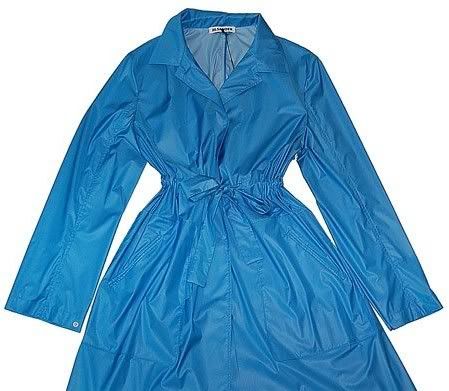
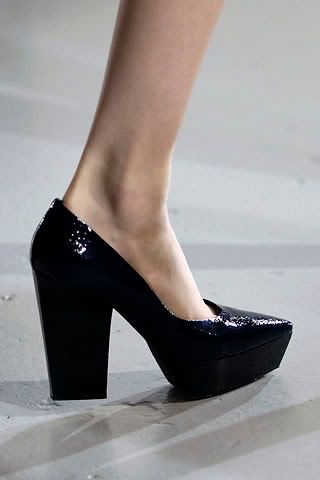
It probably goes without saying that the Jil Sander look per se isn't meant for everyone (and you can say the same about many other designers, like Versace or Givenchy). It's definitely for those who, aside from being able to afford it, understand the aesthetics of distilled personal style stripped all the way down to sheer naked architecture. I'm thinking someone like my niece K. may not care to look this pared down, she's quite expressive of herself in her own eclectic way (think a little of Jane Birkin spiced with Anais Nin and topped with a tiny dash of Frida Kahlo). Still, I can imagine her selecting a few pieces from Sander to frame her personality, like this defiantly bright blue knee length spring coat, or perhaps this unforgivingly sexy pair of impossibly high stacked pumps.

Left: Actress Cate Blanchett dressed in a Jil Sander frock at a movie premiere.

Spending an inordinate amount of money on at least a few pieces from the Jil Sander collection (well, inordinate to someone who doesn't make a couple hundred thousand grand a year) may seem frivolous and extravagant at first glance, contradicting the spare, almost frugal aesthetic quality of the clothes and accessories. But even just a few key pieces can add a very noticeable level of polish to any wardrobe. I wear my Jil Sander shirts with trousers and jacket if it's a more dressed up event, and I roll the sleeves up over my elbows and let the shirt billow untucked over my old cargo shorts and black suede skate shoes for kicking it. Either way the shirt is refined enough to lend distinction and substance.

Think about it, would you rather buy ten Old Navy cotton t-shirts that will wear out in a few years and look ratty, or would you put the money in a single shirt of finest pima cotton, hand tailored, pristinely designed and built to last ten years or more (with proper care, natch) and will dress you up or down depending on how you wear it? Can you tell the difference between an of-the-moment splurge and a wise long term investment, particularly when you happen to be able to spend a little more?

A few supremely crafted and hard wearing pieces - an impeccably sharp black suit, spare but luxurious cashmere sweaters, a skimming and lean little black dress, fine cobbled leather oxfords or pumps - will give your wardrobe far more mileage for years and years than dozens of pieces from, say, Juicy Couture or H&M or Forever 21. And there's an added benefit: while your friends and peers look great in the trendiest looks, you're gloriously beyond that because your confidence emanates from knowing you invested in beautiful clothing that will always service you handsomely, long after your friends throw out their 'hot looks' of the moment. Invest most of your money in the finest basics, then whatever's left over can be spent casually on far less pricey fun things. Your fine clothes can then easily mingle with the more cheap and colourful items you've found on sale at the above stores or at Gap or Urban Outfitters (and will soon throw away after a few seasons anyway), securing your individuality.

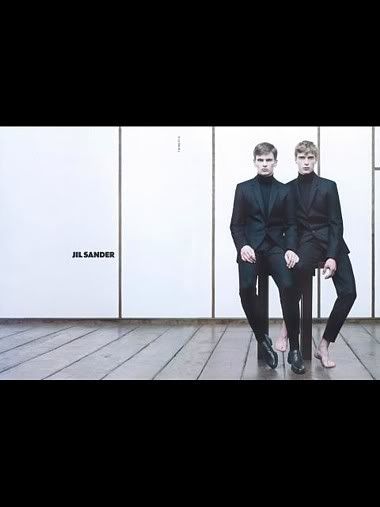
The Jil Sander aesthetic discipline consistently permeates its promotional campaigns. Right: A print advertisement for the menswear collection.

I would leave this with a final word, but I'll instead let Jil Sander herself do so as, in a 1990 interview with the erstwhile style magazine Mirabella, she said it most succinctly and effectively: "Buy less, but buy better. People have already consumed too much."


Related

Jil Sander | official site

Tuesday, August 05, 2008

designer punk history


Above: Vivienne Westwood - 1990 documentary, part 1 | part 2

In a gaming community forum I frequent, we're discussing Hot Topic, a successful suburban and exurban mall store chain that sells watered down punk styled clothes and whose staff generally display disdain and indifference to most of their browsers and customers.

I've never shopped at Hot Topic myself, but I've been there a few times in the past, usually with my nephew H. when on trips to the mall with family. H. went through his suburban punk rebel phase in high school where he sported his 12 inch high crimson coloured mohawk (the real shaved head version, not the lame, cowardly full headed gelled vanilla version many suburban kids usually go for) and his suggestively violent all black style. He freaked out the teachers and admins at this school so much that the principal threatened to kick him out unless he toned it down. Heh..

I'm pretty much a child of the 80s and back then I was in art school in Chicago (where I grew up) studying design, art history, and studio classes, and used to buy some of my clothes and accessories from stores like 99th Floor, The Alley, various vintage shops, Salvation Army stores, Army and Navy surplus stores, and big sales at otherwise posh places like Marshall Field's, City, and Parachute. These were some of the original sources that we poor city kids and starving art students had and it was great shopping. You got to mingle with many true hardcore types who worked in the art & design fields, were local musicians and band members, and staffed or owned nightclubs and concert venues.

Top left to right: Original 'designer punk', 1970s. Vivienne Westwood and Malcolm McLaren. | White gold plated diamond safety pin necklace. Vivienne Westwood. Price - $1,520. | Bottom: "Bondage" suit, 1976. Vivienne Westwood (British, born 1941); Malcolm McLaren (British, born 1941); Black cotton with metal fittings. "Bondage" pants, late 1970s Vivienne Westwood (British, born 1941); Malcolm McLaren (British, born 1946); Black cotton sateen with two-piece matching black wool over-kilt.

Those who shop at (or avoid) Hot Topic should know that that store owes a great deal to the original punk movement of the 1970s in London and New York, when punk truly was a very original, very shocking politically and socially charged reactionary phenomenon. I know my niece K., a young California woman of style who herself went through a passionate rebellious phase during high school and college, collecting tattoos and cutting her hair anime style and dying it orange (intently and effectively shocking and alienating her staid parents), would appreciate this blog post.


The World's End shop on King's Road in London. " Until 1829 the Kings Road was a private royal road leading from Hampton Court to the Palace at Westminster, and only those with a Kings’ pass could use it. The Swinging Sixties brought the King's Road to fame as both Beatles and Rolling Stones members lived here at one time. In the 1970s the King's Road saw the birth of the punk movement when Malcolm Mclaren opened a rock boutique, with the band The Sex Pistols launched from the shop in 1975. The shop still exists and has a large clock outside that runs very fast backwards. The Kings Road today is a busy artery, packed with fashion shops full with young people looking for designer items.
" - Tourblaze.com

During the 1970s there were creative types in fashion and music who led the way, and among the most important, masterful, and influential was British designer Vivienne Westwood. She with her partner Malcolm McLaren explored, and exploited, the styles, symbology, and meaning of subculture and fetishes (S&M, pornography, bondage, anarchism). You can very easily trace back stores like Hot Topic to Ms. Westwood's 'designer punk' boutique World's End on London's King's Road and her aptly named collection of cutting edge clothing (Seditionaries, Sex, Let It Rock, etc.).

My only regret is that I was never able to acquire some of her clothing, but I did find some British streetwear designer stuff to wear back then.

Anyway, I have no ill will towards Hot Topic myself. I think many times the staff's general indifference, conceit, and their lack of professionalism and good customer service belie their boredom with their lame suburban or exurban life, and feelings of cultural and social isolation. Around their age (teens, early twenties) they're still questioning their own self-worth, accomplishments (or lack thereof), and wondering about their place in the world. I think it's just a phase that most of them will eventually outgrow.



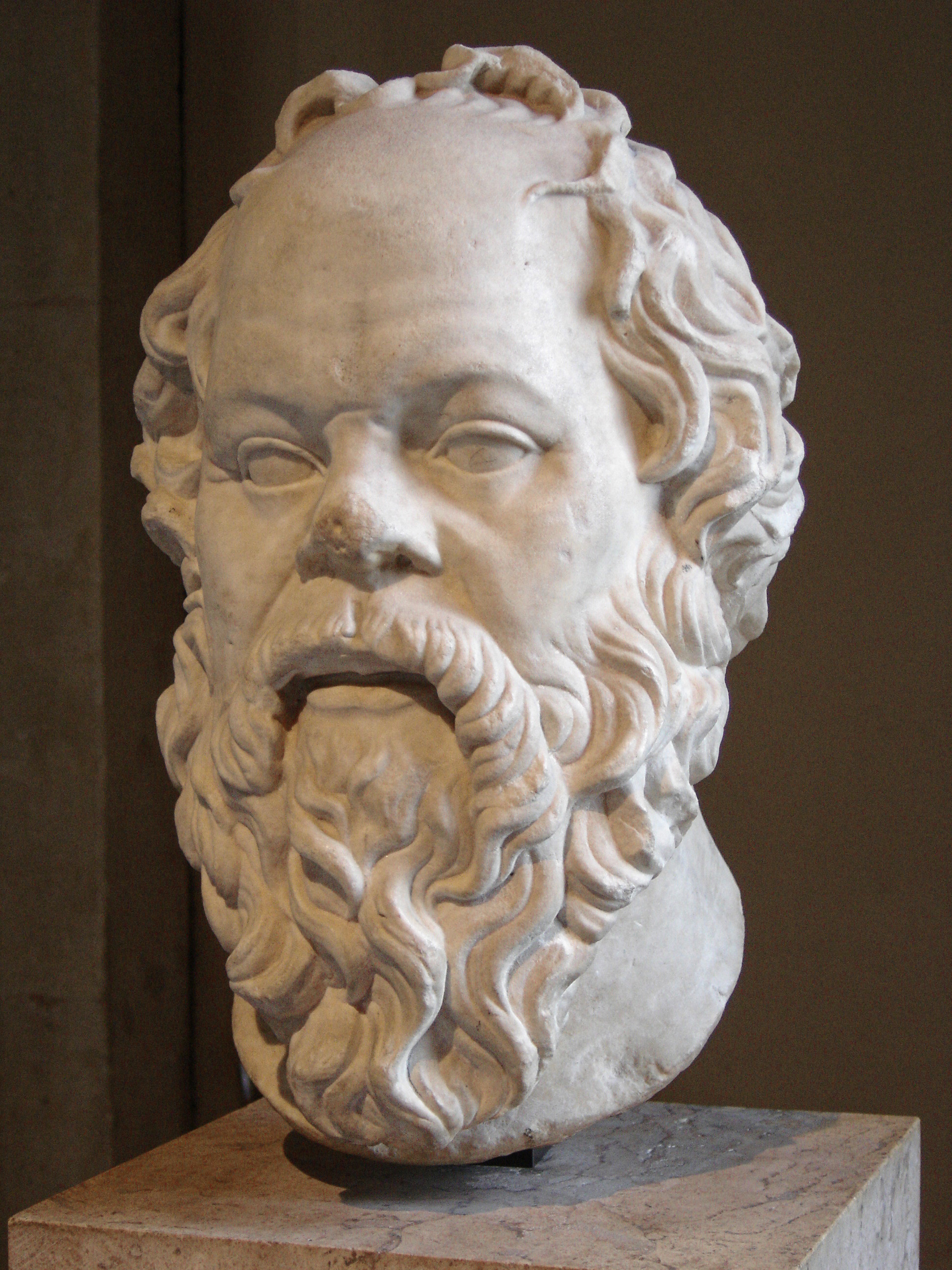
The ancestors of Hot Topic and punk? Philosopher Socrates, and 17th century reactionary Guy Fawkes.

And yet that passionately expressive reactionary phase has a historical lineage threading back centuries, from the intellectual young rebels of ancient Greece (spearheaded by cutting edge philosophers like Socrates) to the intensity of Guy Fawkes in early 17th century London, to the Dada artists and writers in early 20th century Paris with their manifestos, Jack Kerouac and Allen Ginsberg and the Beat Generation in San Francisco and New York during the late 40s and 1950s, the hippie movement of the 60s, and of course punk in the 70s and early 80s.